Melas & exhibitions
Highest shareThe primary channel. Repeat customers are met here.

A spatial exploration of women-led micro-enterprise across India's traditional and emerging market landscapes.
95 in the field across Kerala, Rajasthan, Chennai, Tada and Srikalahasti — plus 10 online interviews with women selling on Instagram. 15 more scheduled to hit our target of 120.
Enterprise Interviews
Kerala · Kudumbashree
Rajasthan · Rajeevika
Online Instagram sellers
Srikalahasti → Chennai → Nimmalakunta → Kerala → Rajasthan
From the SHG marts of Kerala to Rajeevika enterprises in Rajasthan, we traced the physical journeys of 105 women producers — plus the vendors, aggregators and public spaces in between.
Kudumbashree-federation retail across Kerala; exploratory visits in AP + Chennai.
Rajeevika enterprises across Rajasthan — Bagru print, textiles, prepared foods.
Every interviewee runs her own enterprise. No SRLM staff or officials in this round.
Almost all sell directly to customers; some also route through intermediaries.
Cloth sellers and shopkeepers included to see the aggregation side.
Here the women are daily-wage workers under male owners — not sellers. All shared the same view of the work as not their own, and none agreed to be recorded.
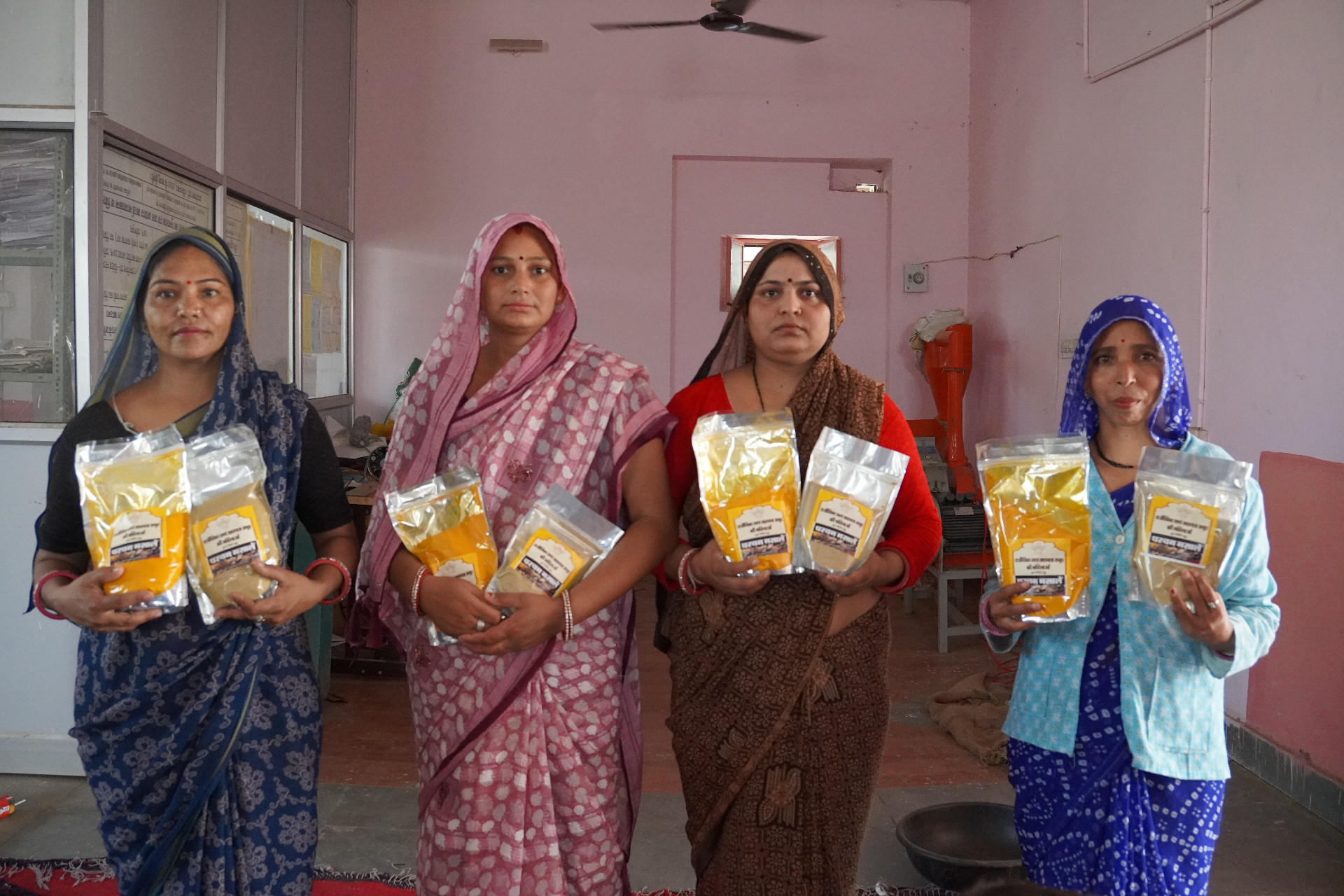
A Rajeevika enterprise unit in Rajasthan — turmeric and besan milled, weighed, packed and labelled on site. The packet is the moment the raw crop becomes something a woman can sell under her own group's name.
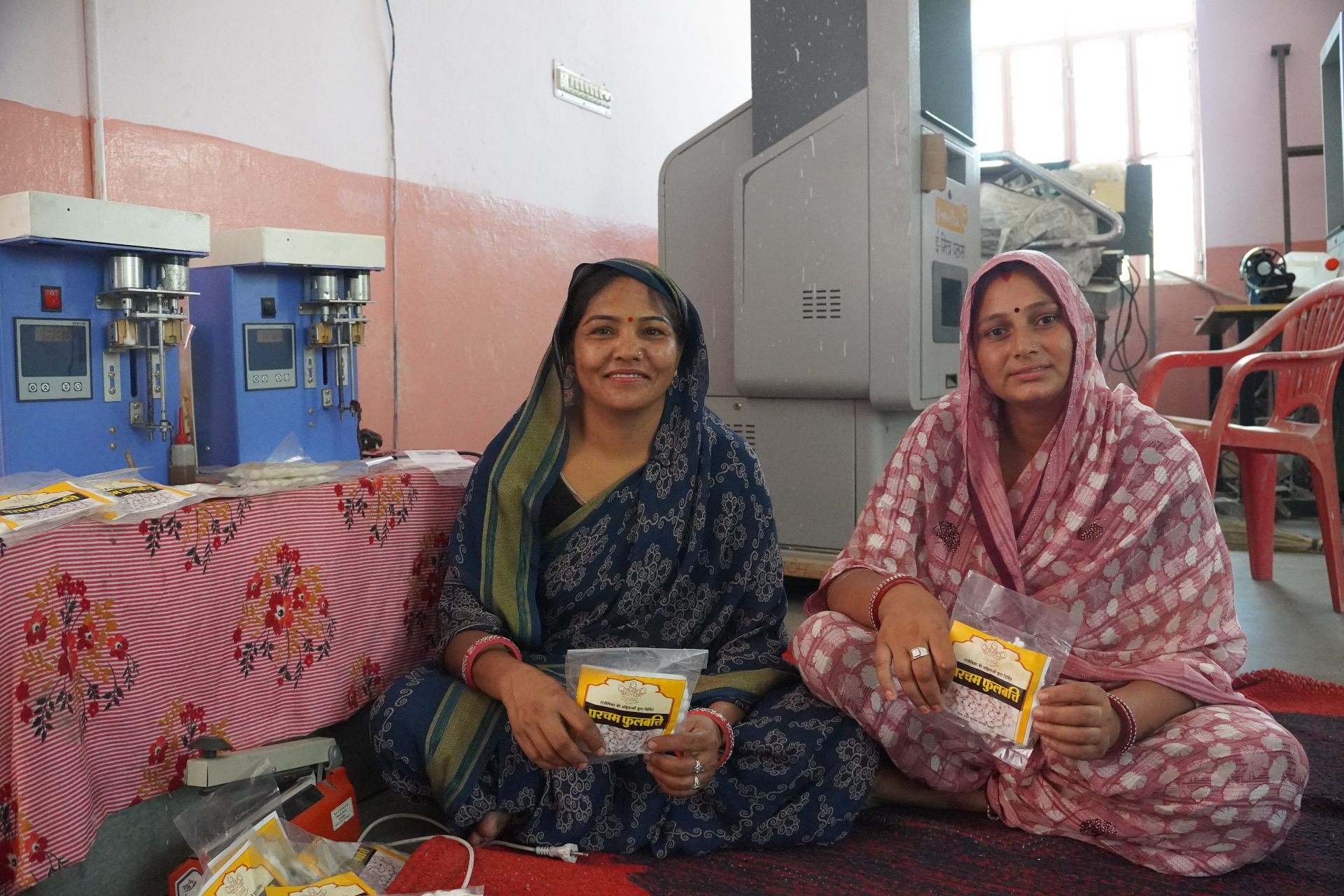
Two producers at the incense unit, holding packets of Parcham Phulbatti — the group's own brand. Behind them, the pressing and packing machines they run themselves.
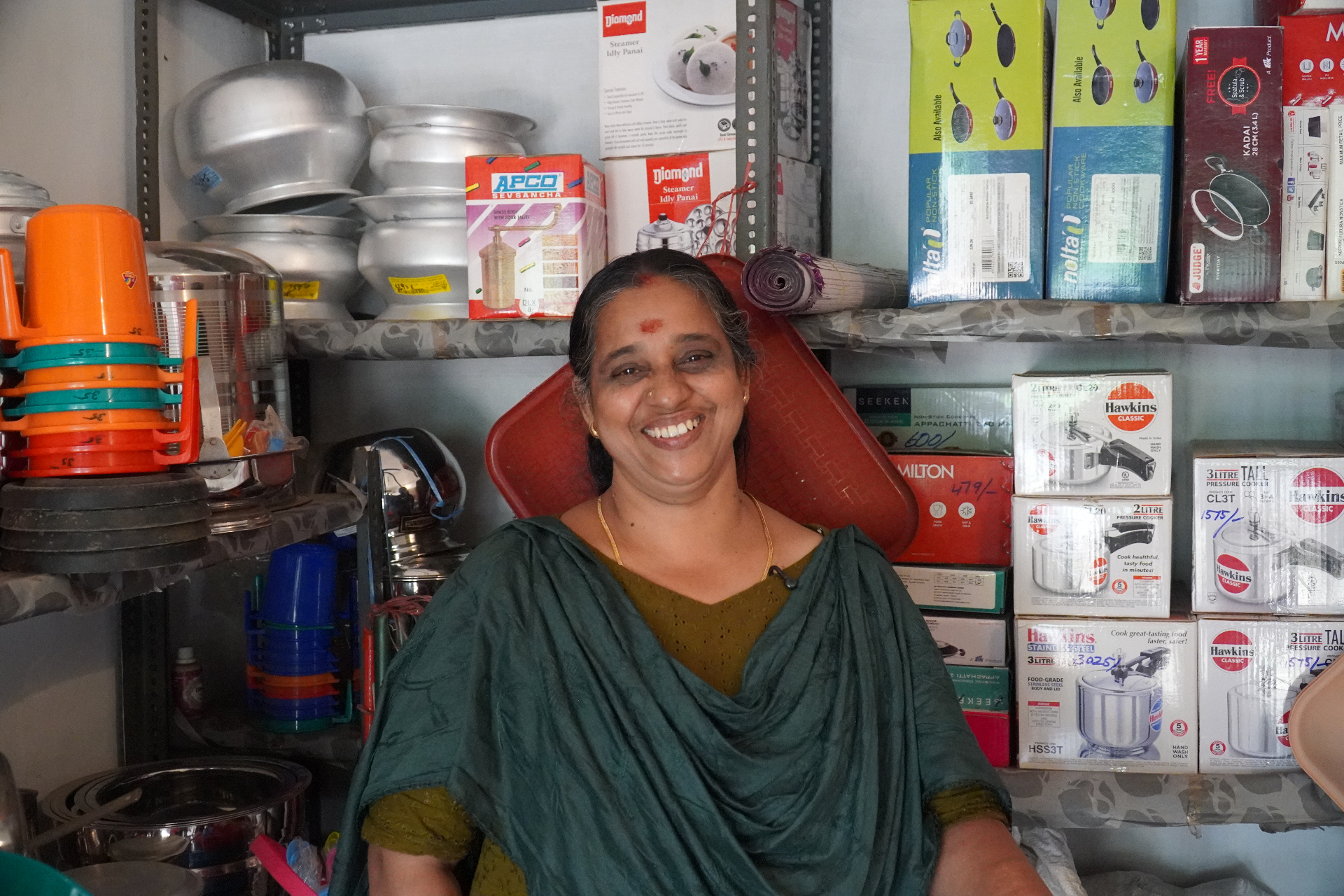
A kitchenware shopkeeper in Kerala — Hawkins pressure cookers, idli steamers, plastic tumblers stacked to the ceiling. A fixed shopfront is one of the rarer channels we've documented: most women in our sample sell through exhibitions, aggregators or from home.
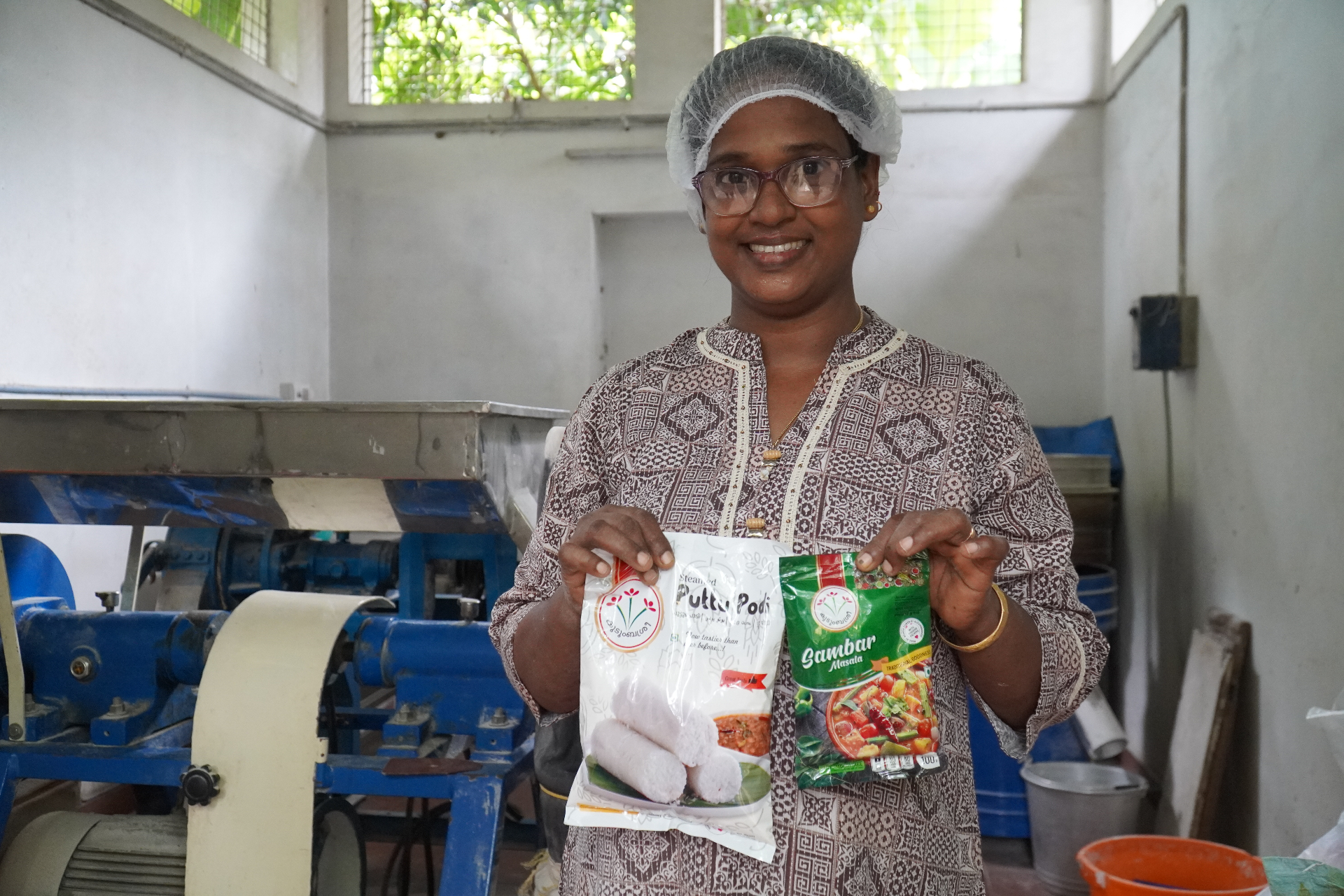
A producer at a Kudumbashree food unit in Kerala holding two of the unit's own products — steamed puttu podi and sambar masala — milled and packed on the grinder behind her.
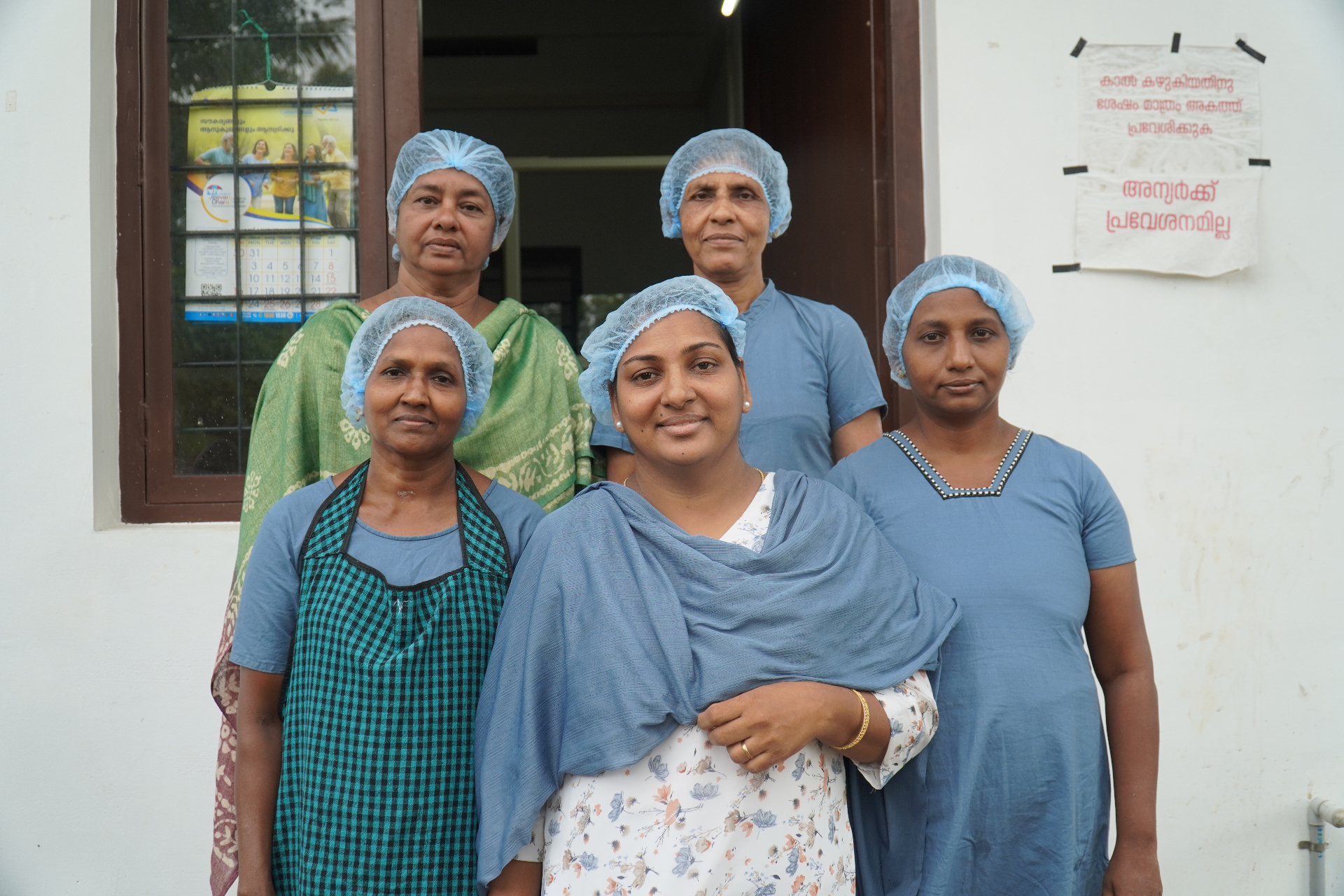
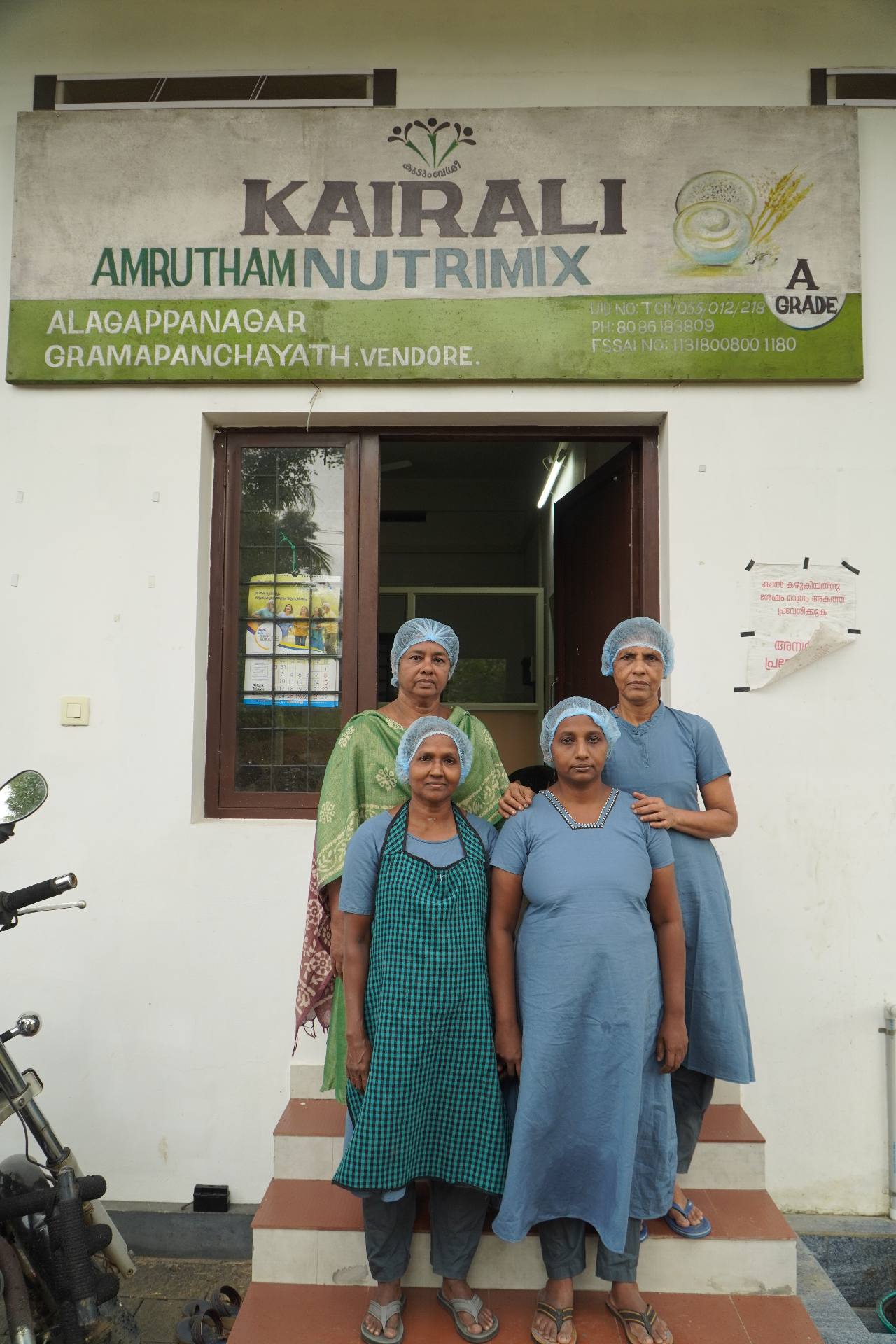
A Kudumbashree unit at Alagappanagar Gramapanchayath — an A-grade workshop supplying supplementary nutrition to the anganwadi system. A rare channel in our sample: the buyer is the state, not a market. The Malayalam notice at the door asks visitors to wash their feet before stepping in — the everyday discipline of running a food-grade unit that supplies the state.
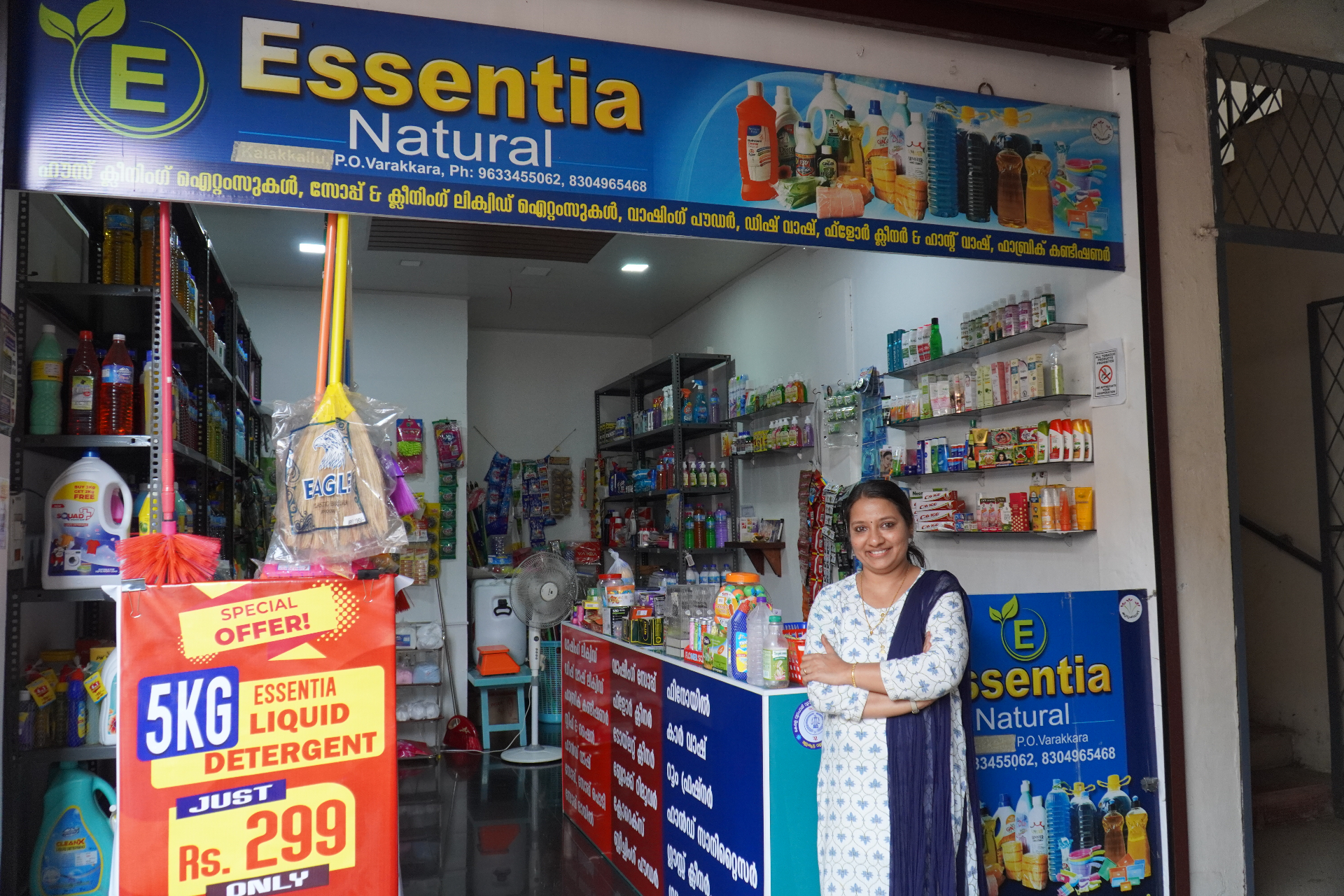
A producer at the entrance of Essentia Natural in Varakkara — a small storefront stocking her own line of cleaning liquids and detergents alongside everyday household goods. A rarer configuration in our sample: the woman is both the maker and the retailer, meeting customers over the counter.
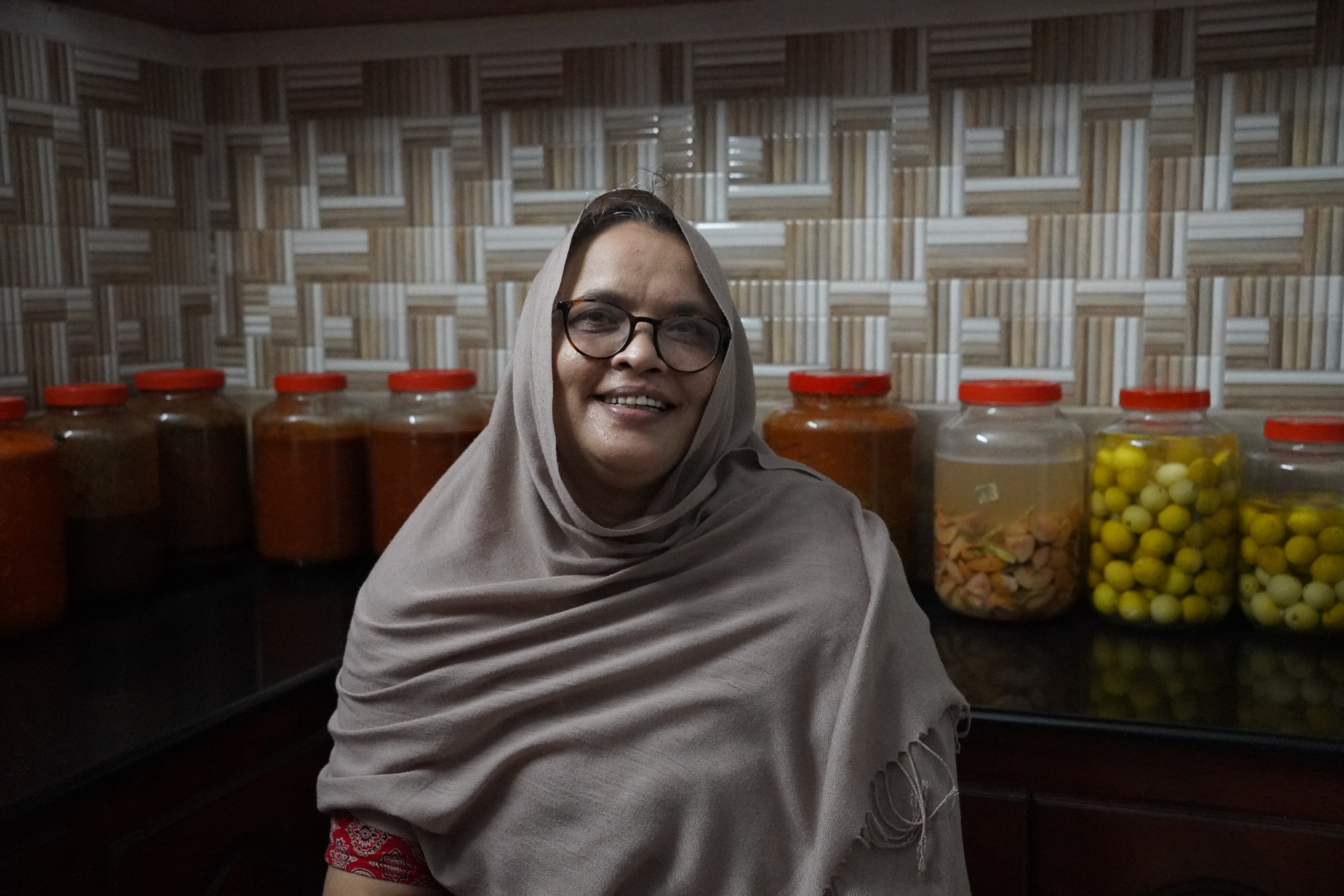
A pickle producer photographed in the storage room of her unit, jars of chilli, mango and lemon lined up behind her. Most of what she makes moves quietly through word-of-mouth orders and small local buyers — a channel that leaves almost no trace outside the room.
We grouped observed sales venues into three ecosystems — traditional, hybrid and digital — based on how they connect a producer to a buyer.
The primary channel. Repeat customers are met here.
SHG-federation retail outlets.
Village and block-level periodic markets.
Local shops buying from producers.
Village pickup, onward sale.
Small-scale, direct to known buyers.
Many women learned their core craft through Kudumbashree / Rajeevika classes. Others used them to add business skills — Meesho, and other ways to sell online.
The personal, block-level relationship with the cluster manager consistently matters most to how well an enterprise does.
Where the family is behind her, she has the mobility and the time to actually go out and sell.
The gap is access to digital-marketing skills — not ambition. Every woman we met wants to build them.
The Digital Paradox
Most sell close to home, though they want to reach buyers well beyond their own area.
They matter precisely because they put women in front of new customers.
Without exception, the women we met want to build these skills.
Across 105 interviews in Kerala and Rajasthan, a small vocabulary surfaced again and again. Size reflects how often each word was spoken.
Hover a word to bring it forward
"Where do you sell?" "Nowhere."
Vegetable vendors in Tada, Sri City. Their selling spot was treated as illegal and repeatedly cleared by the highway police — so they do not count themselves as having a market at all.
Scheduling calls with more micro-entrepreneurs from our field contacts — weighted towards online and e-commerce sellers to fill the gap.
Subtitling the recorded interview videos so they are ready for the photo-essay and edit.
Moving into case studies, the photo-essay, and the video edit from the material collected.